
Today, we are going to be comparing and contrasting the natural representation of an object (when we see an object in its physical form) with a digital representation of the same object. For this example, I am going to use a tennis ball! I have been playing tennis for about 16 years now, which means I have seen plenty of tennis balls in my time.
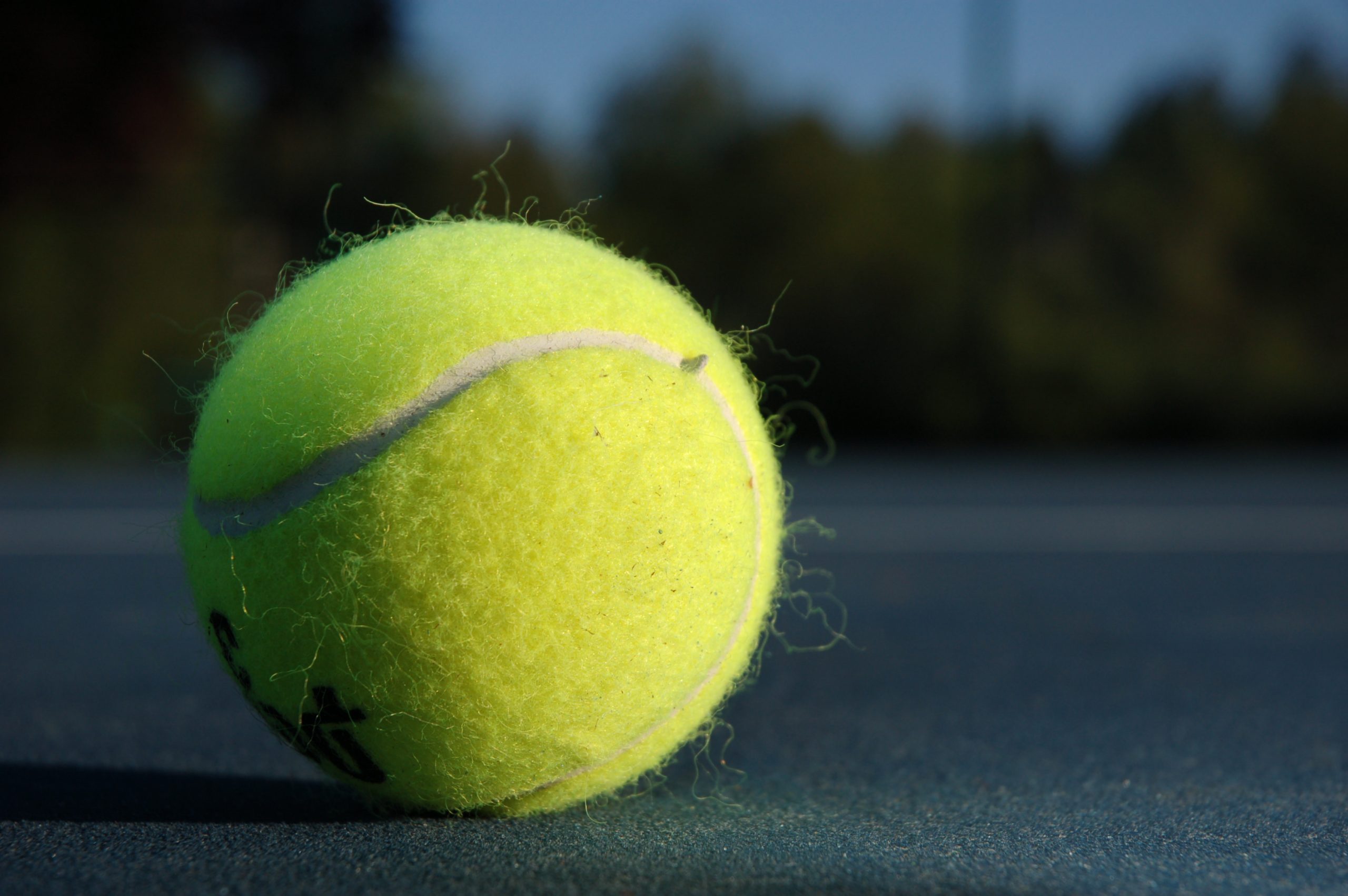
Let’s start by talking about a tennis ball in its natural, physical form. When I hold a tennis ball in my hand, I can feel, as well as see, its physical features. I can feel the fuzz of the felt on my hand, and the indents of the rubber seams that contrast it. Although it’s not heavy, the ball has a physical weight in my hand.
As a tennis player, the most important aspect of the ball’s physical being is the way the ball moves. From watching tennis alone, you wouldn’t think about the number of factors that go into the way a tennis ball moves. The air pressure inside and outside the ball, the spin applied to it, and the wind all affect how the ball moves through space.

The image to the right is of me playing tennis! As you can see in the image, the ball to me at that point in time existed in its physical form. I could see the ball approaching me in space. The ball interacted with all the factors I mentioned before. This is how I define the tennis ball in its physical form.
The image on the left shows Wii Tennis, one of my favorite childhood games. In this image, you can see the digital representation of the tennis ball. The ball in the image is red and yellow, which is an unusual color for a ball to be (unless it’s a beginner ball).
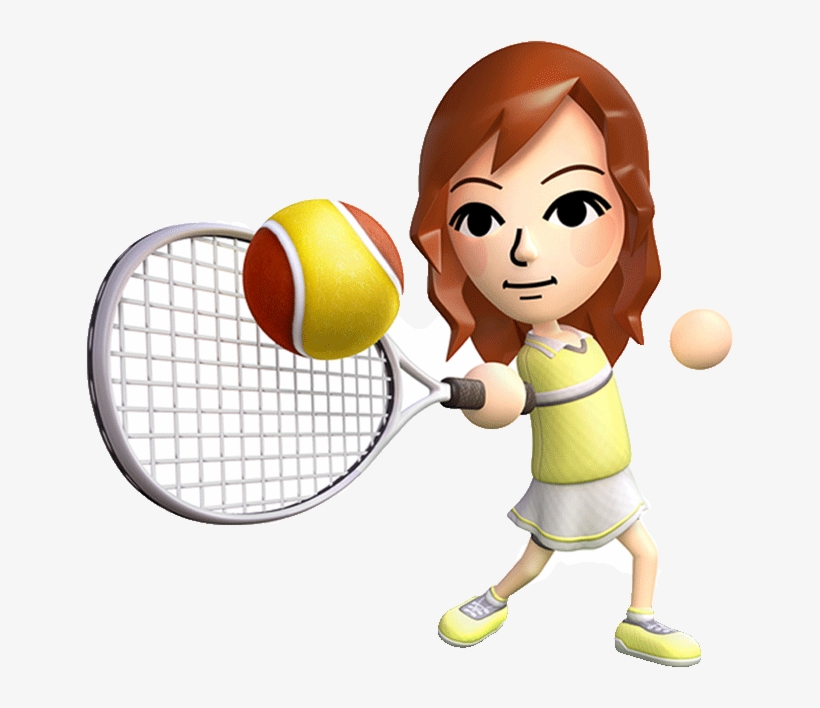
The digital representation of the tennis ball is made fully of data, not felt and rubber. The data making up this ball is shown as pixels, which our eyes make out to be a tennis ball.
The interesting part of the digital representation of a tennis ball is how it can be interacted with. You can duplicate the exact data and pixels needed to represent this tennis ball. You can also zoom in or zoom out to change its size. The ball can also be shared across the internet, reaching areas across the world in seconds.
What’s gained in each respective representation?
Physical:
– You get to interact with the physical characteristics of the ball. You can touch it, throw it, hear it hit the ground, etc.
Digital:
– You can quickly alter the appearance of the ball by zooming in or changing pixel color. With the digital representation, you can easily reproduce it as well.
What’s lost in each respective representation?
Physical:
– You lose the accessibility of the tennis ball when it’s in its physical form. In this way, you can’t send the “message” of a tennis ball unless someone is in throwing range.
Digital:;
– You lose information when a tennis ball is in a digital form. The data comprises the ball, and it’s often simplified to make it easier for the computer to process.
In both its physical and digital concepts, there are losses and gains when it comes to the tennis ball. However, in my opinion, nothing will ever beat having a physical tennis ball in your hand.
Thanks for following along. Stay tuned for the next couple of posts!
I used AI to help me come up with an idea to discuss. Here’s the citation!
“Help me choose something to write about for the contrast of natural and digital representation. I play tennis, I like video games.” prompt. ChatGPT, 4 May. version, OpenAI, GPT-5.5, chat.openai.com/chat.